Biostimulants
Biostimulants are modern products that naturally support plant development by increasing their resistance to environmental stresses such as drought or low temperatures. They improve the uptake of nutrients by crops, which results in higher yields of better quality. The use of biostimulants is an investment in plant health and vitality, leading to more efficient agricultural production. These products also enhance the efficiency of mineral fertilizer use, reducing losses and minimizing environmental impact.
Download brochure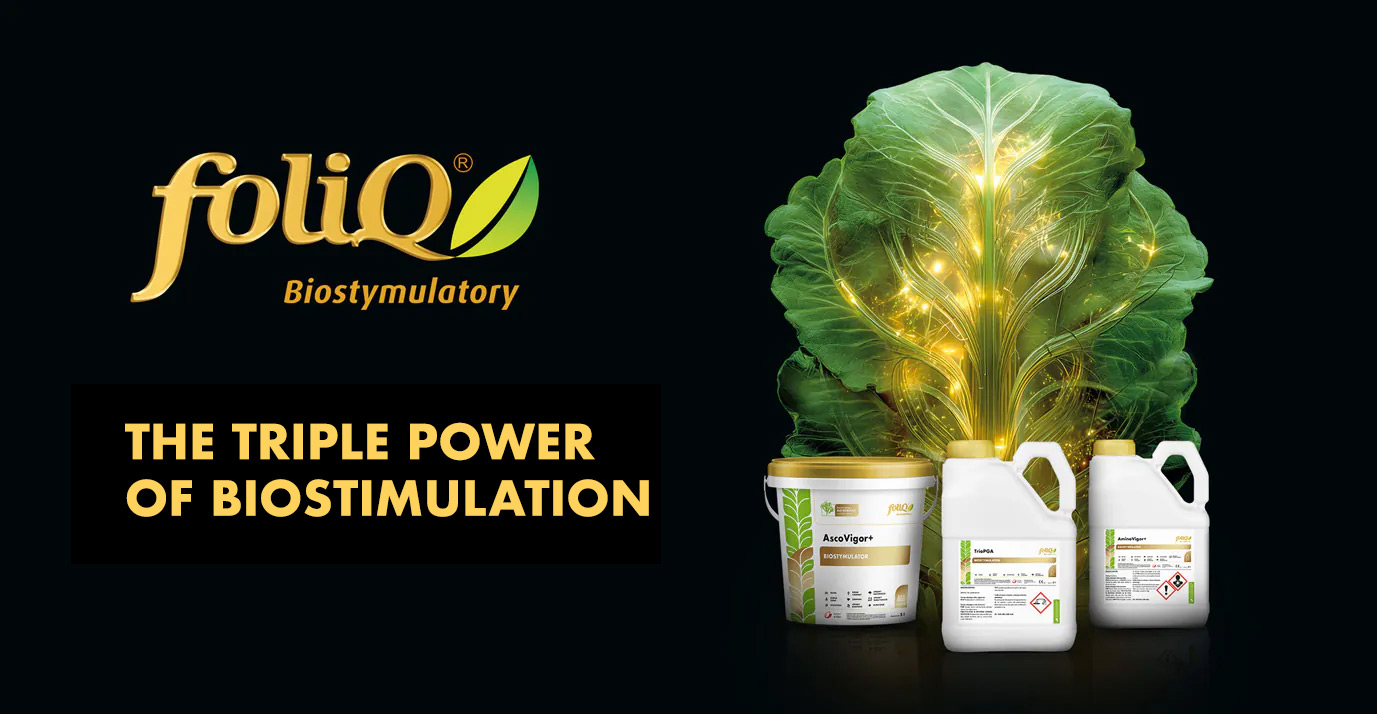
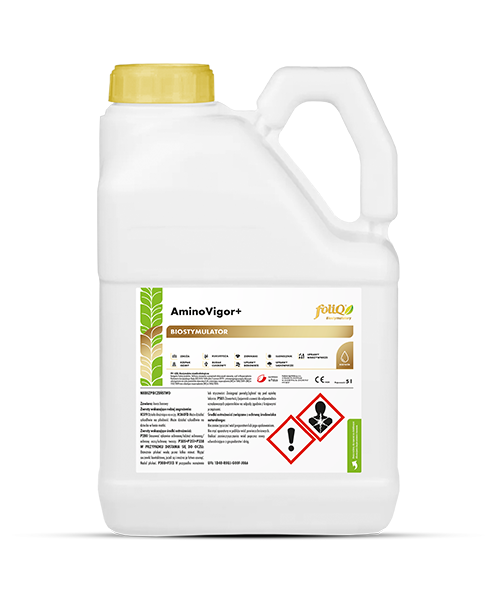
Package: 1 l, 5 l, 10 l
foliQ® AminoVigor+
Recovery and energy after stress
foliQ® AminoVigor+ is a leading biostimulant designed for use in all major crops. It contains a high concentration of biologically active L-amino acids exclusively of plant origin. These amino acids are obtained through the enzymatic breakdown of proteins using selected strains of Corynebacterium glutamicum bacteria.
The product is particularly recommended for crops that have already been exposed to abiotic stress, as it helps mitigate its effects and accelerates plant regeneration. The amino acids contained in the formulation act as natural chelating agents for micronutrients, improve plant performance under drought and high-temperature conditions, and support the restoration of homeostasis following damage caused, for example, by herbicides. Thanks to its high content of proline, arginine, and glutamic acid, the fertilizer supports photosynthesis, nitrogen metabolism, and the regulation of stomatal activity. The use of foliQ® AminoVigor+ ensures a rapid supply of energy for cell regeneration and stabilizes yields under challenging growing conditions.
Read morecereals, winter oil seed rape, maize, sugar beet, potato, legumes, sunflower, orchards, vegetables
left-handed amino acids of plant origin (including proline, arginine, glutamic acid, glycine, serine)
| Crop | Recommended applications | Recommended dose (l/ha) | Recommended volume of working solution per hectare | Time of application | Purpose/expected effects |
| Cereals | 2 – 3 | 3 | 150 – 300 | From the 3-leaf stage to thebeginning of flowering. BBCH 13 to BBCH 61. |
It has a beneficial effect on the plant’s response to stress, including drought and high temperatures. It increases both yield quality and yield size. |
| Winter Oil Seed Rape | 2 – 3 | 3 | 150 – 300 | From autumn at the 2-leaf stage to the beginning of flo- wering (first open flowers). BBCH 12 to BBCH 61. |
It has a beneficial effect on photosynthesis, strengthens cell walls and promotes root mass development. It increases chlorophyll content in plants. It supports the plant’s response to stress, including drought and high temperatures. It increases both yield quality and yield size. |
| Maize | 1 – 2 | 3 | 150 – 300 | From the 3-leaf stage to the last moment the sprayer can enter the field. BBCH 13 to BBCH 61. |
It has a beneficial effect on the plant’s response to stress such as drought and high temperatures. It increases both yield quality and yield size. |
| Sugar beet | 1 – 2 | 3 | 150 – 300 | From the 4-leaf stage to row closure. BBCH 14 to BBCH 39. | It has a beneficial effect on the plant’s response to stress, including drougt and both high and low temperatures. It increases both yield quality and yield size. |
| Potato | 3 | 3 | 150 – 400 | From the beginning of row closure to the beginning of flowering. BBCH 31 to BBCH 61. |
It has a beneficial effect on the plant’s response to stress, particularly drought and high temperatures. It increases both yield quality and yield size. |
| Legumes | 1 – 2 | 3 | 150 – 300 | From the 4-leaf stage to the beginning of flowering. BBCH 14 to BBCH 61. |
It has a beneficial effect on the plant’s response to stress, including drought and high temperatures. It increases both yield quality and yield size. |
| Sunflower | 1 – 2 | 3 | 150 – 300 | From the second true leaf stage to the last moment the sprayer can enter the field. BCH 14 to BBCH 61. |
It has a beneficial effect on the plant’s response to stress, including drought and high temperatures. It increases both yield quality and yield size. |
| Orchards | 2 – 4 | 3 | 300 – 700 | From the green bud stage to the fruitlet growth stage. | It improves fruit set. It increases the diameter of pome fruits and enhances the size and weight of berry fruits. It increases both yield quality and yield size. |
| Vegetables | 2 – 4 | 3 | 300 – 700 | 10–14 days after transplanting or 14–21 days after emergence; subsequent applications every 7–14 days. | It improves the growth rate of vegetative parts. It has a beneficial effect on the plant’s response to stress, including drought and high temperatures. It increases both yield quality and yield size. |
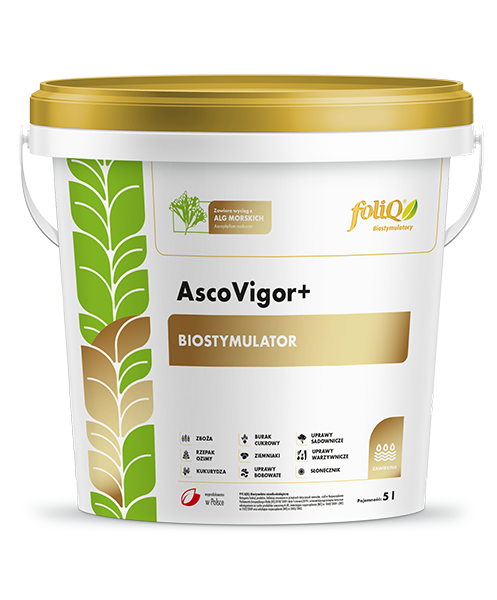
Package: 1 l, 5 l, 10 l
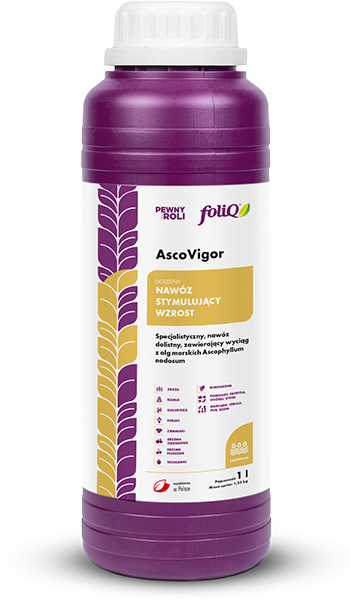
foliQ® AscoVigor+
The strength of resilience from Ascophyllum nodosum
foliQ® AscoVigor+ is a high-quality plant biostimulant intended for use in all major crops. Its unique formulation is based on a natural extract of the marine alga Ascophyllum nodosum, rich in polysaccharides, phytohormones, and antioxidants. These components act as natural resistance elicitors, activating the plant’s own defense mechanisms.
Regular application of the product supports plants under challenging environmental conditions such as drought, frost, and heat stress. The growth phytohormones it contains (auxins and cytokinins) stimulate the development of roots and above-ground parts, maintaining proper growth dynamics and photosynthetic activity. By activating defense genes and antioxidant enzymes, the product increases chlorophyll levels in leaves. The use of foliQ® AscoVigor+ ensures more stable yields and a higher share of marketable produce, while maintaining the highest level of application safety in compliance with EU regulations.
Read morecereals, winter oil seed rape, maize, sugar beet, potato, legumes, sunflower, orchards, vegetables
natural extract of marine algae Ascophyllum nodosum
| Crop | Recommended applications | Recommended dose | Recommended volume of working solution per hectare | Time of application | Purpose / expected effects |
|---|---|---|---|---|---|
| Cereals | 2 – 3 | 3 | 150 – 300 | From the 3-leaf stage to the beginning of flowering. BBCH 13 to BBCH 61 | It has a beneficial effect on the plant’s response to stress, including drought and high temperatures. It increases both yield quality and yield size. |
| Winter Oil Seed Rape | 2 – 3 | 3 | 150 – 300 | From autumn at the 2-leaf stage to the beginning of flowering (first open flowers). BBCH 12 to BBCH 61 | It has a beneficial effect on photosynthesis, strengthens cell walls and promotes root mass development. It increases chlorophyll content in plants. It supports the plant’s response to stress, including drought and high temperatures. It increases both yield quality and yield size. |
| Maize | 1 – 2 | 3 | 150 – 300 | From the 3-leaf stage to the last moment the sprayer can enter the field. BBCH 13 to BBCH 61 | It has a beneficial effect on the plant’s response to stress such as drought and high temperatures. It increases both yield quality and yield size. |
| Sugar beet | 1 – 2 | 3 | 150 – 300 | From the 4-leaf stage to row closure. BBCH 14 to BBCH 39 | It has a beneficial effect on the plant’s response to stress, including drought and both high and low temperatures. It increases both yield quality and yield size. |
| Potato | 3 | 3 | 150 – 400 | From the beginning of row closure to the beginning of flowering. BBCH 31 to BBCH 61 | It has a beneficial effect on the plant’s response to stress, particularly drought and high temperatures. It increases both yield quality and yield size. |
| Legumes | 1 – 2 | 3 | 150 – 300 | From the 4-leaf stage to the beginning of flowering. BBCH 14 to BBCH 61 | It has a beneficial effect on the plant’s response to stress, including drought and high temperatures. It increases both yield quality and yield size. |
| Sunflower | 1 – 2 | 3 | 150 – 300 | From the second true leaf stage to the last moment the sprayer can enter the field. BBCH 14 to BBCH 61 | It has a beneficial effect on the plant’s response to stress, including drought and high temperatures. It increases both yield quality and yield size. |
| Orchards | 2 – 4 | 3 | 300 – 700 | From the green bud stage to the fruitlet growth stage. | It improves fruit set. It increases the diameter of pome fruits and enhances the size and weight of berry fruits. It increases both yield quality and yield size. |
| Vegetables | 2 – 4 | 3 | 300 – 700 | 10-14 days after transplanting or 14-21 days after emergence; subsequent applications every 7-14 days. | It improves the growth rate of vegetative parts. It has a beneficial effect on the plant’s response to stress, including drought and high temperatures. It increases both yield quality and yield size. |
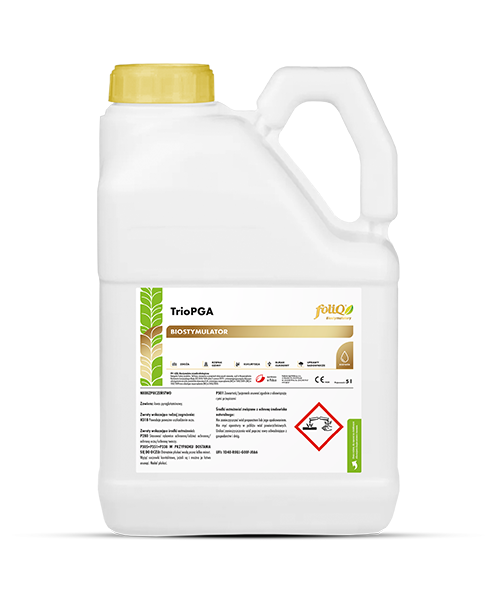
Package: 1 l, 5 l, 10 l
foliQ® TrioPGA
Maximum photosynthetic performance
For plantations focused on achieving the best possible results, use TrioPGA to unlock the maximum potential of crop varieties, fertilization, and plant protection programs. foliQ® TrioPGA is the only plant biostimulant on the market that increases photosynthetic intensity, making it a key product in modern crop production. The formulation improves the utilization of carbon dioxide and nitrogen, enhancing overall plant metabolic efficiency. Its uniqueness lies in the fact that it enables plants with C3 photosynthesis, typical of temperate climates, to perform like more efficient C4 plants. This allows for the production of higher amounts of sugars, which serve as the primary fuel for growth and yield formation.
The effectiveness of foliQ® TrioPGA is based on the synergy of three groups of active ingredients: pyroglutamic acid (PGA), which drives carbon dioxide uptake; a high content of biologically active L-amino acids; and phytohormones that enhance physiological activity. Scientific studies conducted by the Warsaw University of Life Sciences (SGGW) have shown that the use of the product increases photosynthetic intensity by approximately 30% and improves water use efficiency by around 30%. As a result, plants maintain their growth rate under challenging conditions, sustaining stable energy production even under stress.
Read morecereals, winter oil seed rape, maize, sugar beet, orchards
pyroglutamic acid (PGA) in the left-handed form, natural left-handed amino acids, growth and anti-stress phytohormones
| Crop | Recommended applications | Recommended dose | Recommended volume of working solution per hectare | Time of application | Purpose / expected effects |
| Cereals | 2 – 3 | 1 | 150 – 300 | From the 3 true leaf stage to the beginning of flowering. BBCH 13 to BBCH 61. | Promotes greater above–ground biomass production. |
| Winter Oil Seed Rape | 2 – 3 | 1 | 150 – 300 | From autumn at the 4 true leaf stage until the beginning of flowering (first open flowers). BBCH 14 to BBCH 61. | It has a beneficial effect on photosynthesis and strengthens cell walls. It increases chlorophyll content in plants. It contributes to a greater number of branches. |
| Maize | 1 – 2 | 1 | 150 – 300 | From the 3 true leaf stage until the last moment the sprayer can enter the field. BBCH 13 to BBCH 61. | It increases grain yield. It enhances plant vigor. |
| Sugar beet | 1 – 2 | 1 | 150 – 300 | From the 4 true leaf stage until row closure. BBCH 14 to BBCH 39. | It increases the size and quality of the yield. It contributes to higher sugar content. |
| Orchards | 3 – 4 | 1 | 300 – 700 | From the green bud stage to the fruit set development stage. | It increases fruit diameter. It improves fruit size uniformity. It reduces fruit drop. |
foliQ® Biostimulants – Intelligent support for stress and development
Efficient agricultural production today is based on the synergy between traditional nutrient supply and modern biostimulation, which acts as a precise “performance coach” for plants. While mineral fertilizers build plant tissues, biostimulants such as foliQ optimize physiological processes, increasing the efficiency of nutrient use and minimizing environmental losses. Through the use of substances such as pyroglutamic acid (PGA), amino acids, and seaweed extracts, plants improve the uptake of macro- and micronutrients. Combined with enhanced tolerance to drought and frost, this allows crops to achieve record biomass gains and stable, high-quality yields.
What are biostimulants and why is plant biostimulation crucial?
Plant biostimulants are modern tools that support natural physiological processes in plants. Unlike mineral fertilizers, which supply nutrients for tissue formation, a biostimulant acts as a “trainer” by strengthening the efficiency of vital processes and plant resilience. Its purpose is to stimulate nutrient-related processes regardless of the nutrient content available in the soil.
The formulation of foliQ biostimulants is based on biologically active substances:
- L-amino acids: Plant-derived amino acids obtained through the enzymatic breakdown of proteins, essential for plant regeneration.
- Seaweed extract (Ascophyllum nodosum): A rich source of polysaccharides, phytohormones, and antioxidants.
- Pyroglutamic acid (PGA): A unique inducer that effectively drives and enhances the photosynthesis process.
Biostimulants against drought, frost, and abiotic stress
Climate change is forcing the adoption of technologies that help plants survive extreme conditions. Biostimulation effectively mitigates the effects of the most common abiotic stresses occurring in Poland:
- Drought stress: Causes stomatal closure and inhibition of photosynthesis.
- Low-temperature stress: Short-term frosts or cold spells lead to tissue damage and loss of fruit or seed set.
- High-temperature stress (heat): Results in excessive water loss through transpiration and leaf scorch.
- Soil salinity stress: Limits water and ion uptake, leading to plant stunting.
The triple power of foliQ biostimulation – how to choose the right product?
The integrated foliQ technology offers three stages of support, allowing farmers to respond appropriately to field conditions:
- foliQ AscoVigor+ (Before stress): Activates natural defense mechanisms and prepares plant tissues for upcoming adverse conditions.
- foliQ AminoVigor+ (After stress): Focuses on regeneration and the supply of energy required for plant recovery after damage has occurred.
- foliQ TrioPGA (Growth propagator): A unique biostimulant that increases photosynthetic intensity by approximately 30%. It enables plants with C3 photosynthesis to perform like more efficient C4 plants.
Biostimulants – effectiveness proven in agriculture and horticulture
All foliQ biostimulants are CE certified, confirming their purity, stability, and application safety in compliance with EU standards. Their biological effectiveness has been verified in more than 70 trials conducted by renowned institutions such as the Institute of Plant Protection – National Research Institute (IOR-PIB), the Warsaw University of Life Sciences (SGGW), and the Poznań University of Life Sciences.
Research results confirmed, among others:
- an increase in sugar beet root yield of up to more than 8 t/ha,
- an increase in plant biomass by 18–25%,
- a reduction of frost-related losses in orchard crops by 40–60%,
- an improvement in water use efficiency in the photosynthesis process by 30%.
How to use foliQ plant biostimulants?
To achieve maximum effectiveness, it is important to follow the recommended application rates and timings:
- Application rate: Typically 1–3 l/ha using 150–700 liters of water per hectare, depending on the crop.
- Timing: From the stage of several true leaves (BBCH 12–14) until the beginning of flowering (BBCH 61).
- Application principle: The best results are achieved by applying AscoVigor+ 24–48 hours before the expected stress, and AminoVigor+ immediately after the stress has subsided.